
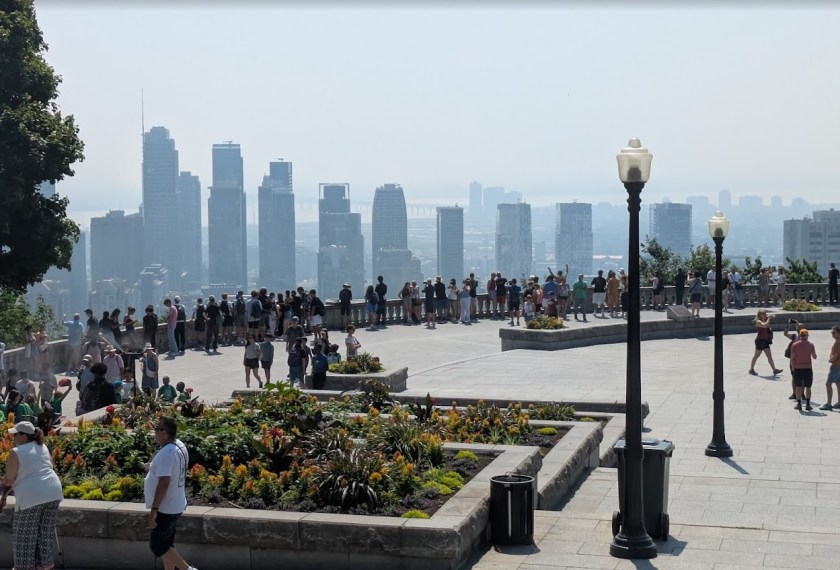
My wife and I liked Brazil but never dreamed of living there. After the trip, I dropped Duolingo as well as the sertanejo and funk music. I stopped reading Brazilian history. Two months after visiting Montreal and Quebec, I’m still listening to mostly French music and taking French lessons on the phone. We were so enamored with Montreal that we now flirt with the idea of living there.
When Americans ask why, my short answer is that Montreal is cleaner, safer and more civilized than anywhere I’ve lived in the United States. There’s not a spec of litter in all of downtown. There is a significant homeless population, but they’re not aggressive. Property crime downtown is real, but beyond that … it’s Canada. It is what’s possible in a first-world country if you try.
“Cleaner, safer, more civilized” is not the whole story, just the short story. My fascination has more to do with being among the men that don’t fit in, who need to seek out “the strange and new.” Brazil was different, but barely different. Speaking a little Portuguese woke something up inside, but it wouldn’t be much of a challenge. French would be a real shock. I need that, both the language and culture.
I’ve been curious about the French for years, since discovering Edith Piaf. I imagined France as a middle ground between Hispanic / Iberian culture and England / Gringolandia. It has the romance of the Mediterranean but without such a heavy dose of chaos, apathy and ignorance. Maybe it’s that rare breed featuring the best of both worlds.
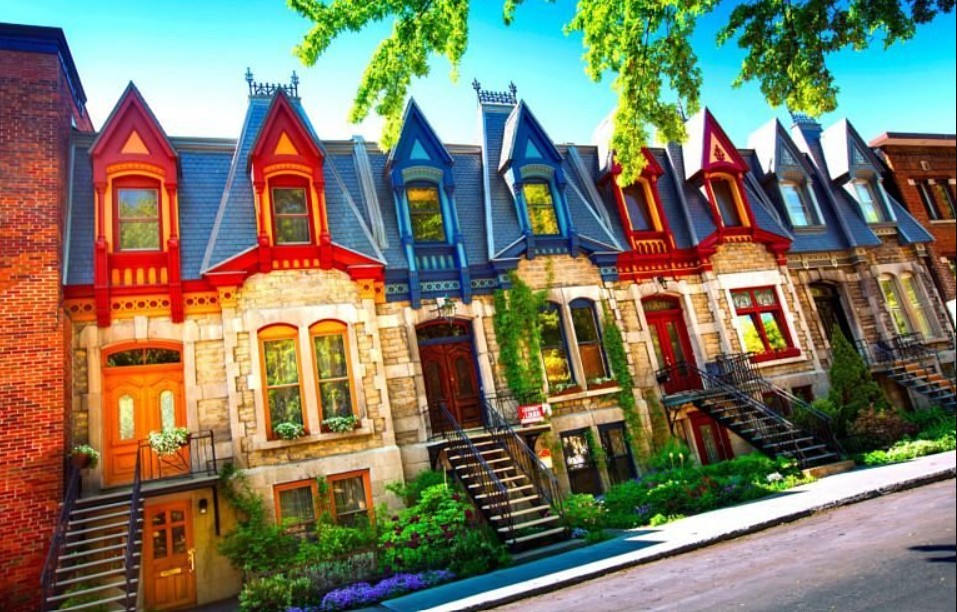
What attracts me most to French culture is the singular focus on beauty. Everything in life seems to be for the sake of beauty. The houses off the beaten path boast fascinating architecture. Even the provincial town we stayed in for a couple nights was beautiful. They had an old pedestrian bridge where somebody maintains flowerpots. I was so inspired that I accompanied my wife to the nursery (a first) to assist in our home beautification.
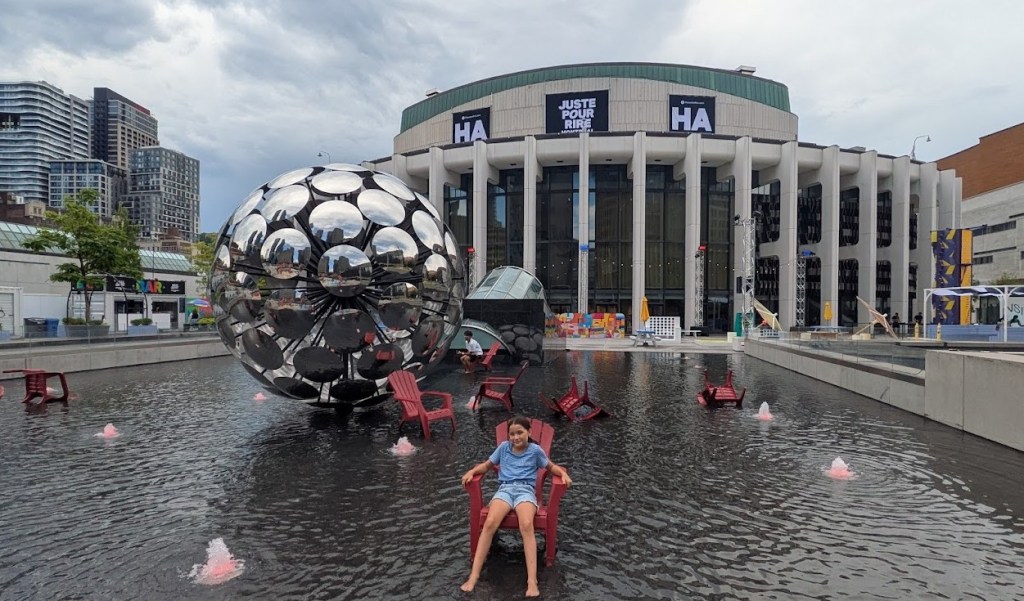
Art is everywhere in Montreal. I now understand how a city of 4 million loses its baseball team. They’re more into the arts than sports. The expat writers and artists of a century ago all went to Paris. What did Hemingway and Miller know about the French that we slumdwellers in Latin America don’t?
It’s worth pointing out that I’ve never been to France, only Quebec province. I’m sure some English or Anglo-Canadian readers will have some objections to my new Francophilia. Let me know in the comments where I’m wrong.
The Quebecois have, to say the least, a complicated political history in Canada. There is a separatist movement, which probably peaked a generation ago, but they continue to fight tooth and nail to preserve the culture, to the point of annoying many of their own. I’ve read that the greatest complaint of being an Anglo in Quebec is the language Nazism.
French is the only official language of Quebec, which includes 8.5 million people in Montreal, Quebec City and provincial small towns. Quebec requires French be twice the size of the English translation in signage and advertising. Companies with 25 employees or more must conduct business and operations in French. Government agencies communicate only in French, with few exceptions. Quebec has a language police enforcing all this: the OQLF.
One shopkeeper told me she attended an English school because her parents were immigrants. But her friends who were children of Quebecois did not have that option, they were only eligible to attend a French public school.
I learned before the trip that Montreal is an international city and nobody minds if you don’t speak French. I definitely didn’t need any French, but I made the effort. I know many of them appreciate the effort, but I sensed annoyance from a few. As if to say, “Stop being a wanker tourist, everybody speaks English here.”
The only time I had to carry a conversation with Google Translate was a Cameroonian Uber driver, recently arrived in Canada. He said he needed to learn English, French wasn’t enough to live in Montreal.
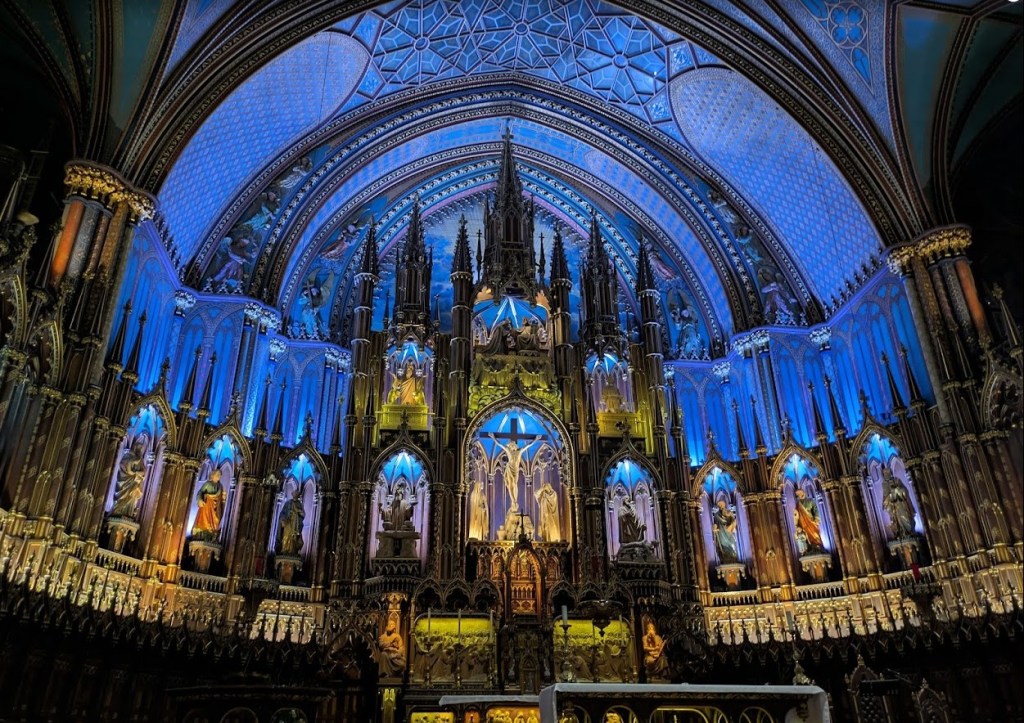
We stayed a half-block from the Notre Dame Basilica de Montreal. The interior is among the most beautiful I’ve seen anywhere in the world.
In the States, parishioners take communion into their hand, instead of directly on the tongue, which is still the standard in Latin America. I was surprised to see a group of Quebecois men kneel to receive communion directly on the tongue. Kneeling for communion, I had never seen that anywhere.
I didn’t talk to them, so I’m not sure they were Quebeckers. In Montreal, they could be Greeks or Eastern Orthodox or who knows what else. But I think they were provincial Quebecois because they were wearing flannels on a July day. Summer is the season of construction in Montreal and many of the builders are from the northern province and small towns. Who else would be wearing flannels in July?
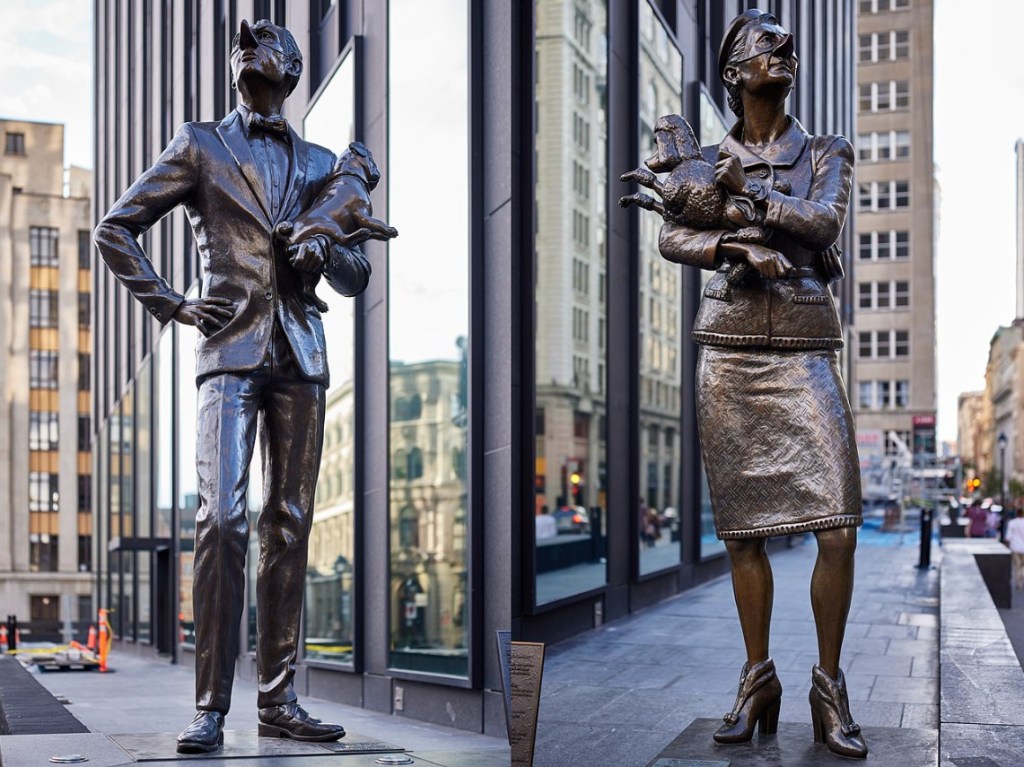
The Catholic faith of the French Canadians is a historic flashpoint of dispute with the English-speaking Canadians, illustrated by The English Pug and the French Poodle statues in the Place d’Armes.
On one side of the plaza, a stereotypical Englishman holding a pug turns his nose up at the basilica (symbol of French authority). On the other side, a typical Frenchwoman holding a French poodle turns her nose up at the Bank of Montreal (English authority). Meanwhile, both dogs are staring at each other, eager to meet. I love that.
Learning about the centrality of Catholic faith in Quebec was surprising. The strong links between the Church and government and its influence in 20th century Quebec sounds more like Ireland than France.
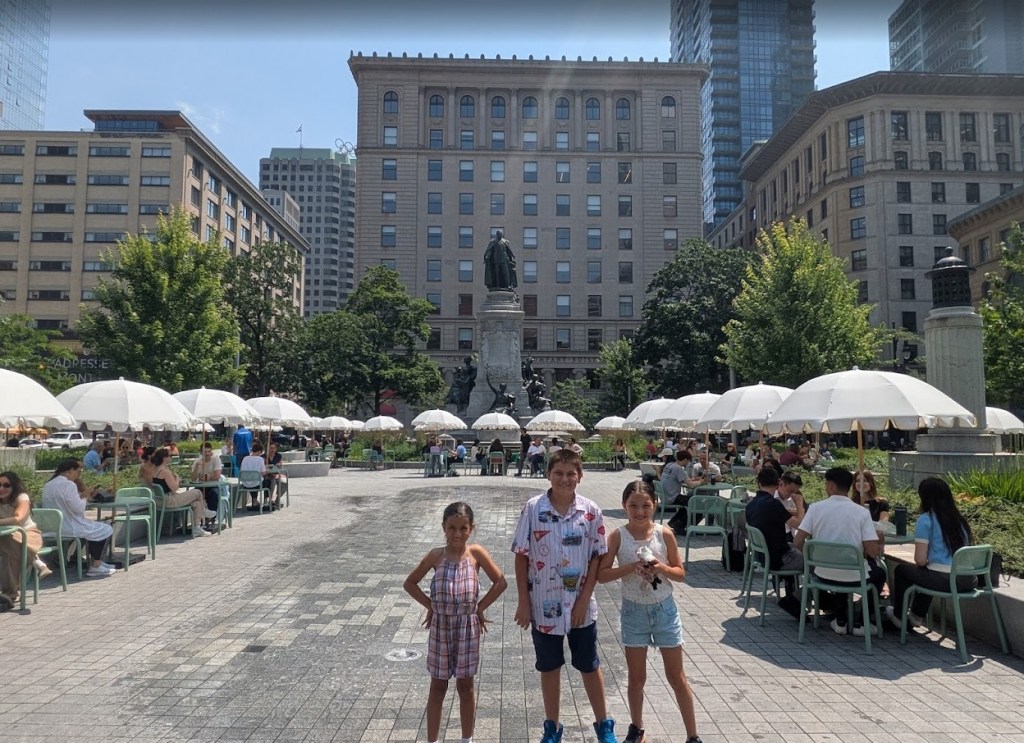
I admired Montreal’s generous public spaces. In the Place Ville Marie, I thought we had stumbled upon a fancy restaurant patio and would have to find somewhere else to sit. I realized it was a sea of fancy furniture for anybody to have lunch on, as all the tables were covered in the downtown office workers’ Tupperware containers and lunches brought from home. Fancy furniture interspersed with beautifully manicured gardens, for anybody to use.
Going back to “cleaner, safer, more civilized,” I couldn’t believe how respectful the Montreal drivers are of pedestrians. Philly drivers are infamously aggressive, but Philadelphia is urban enough that most are watching out for pedestrians and cyclists. I think the suburbs of Western cities are the worst, simply because the drivers are not looking for you. But I haven’t seen anywhere in the United States where drivers are good about respecting pedestrians.
On a downtown Montreal corner I saw a traffic cop waving cars to advance through a green light. I stood with jaw dropped as the officer had to implore the cars to advance, because they had the right of way. I was one of two pedestrians waiting for our turn to cross, and the sight of us led each and every car to slow down and let us cross despite their having the light.
The cop noticed my jaw dropped and said, “Beaucoup pacient.”
“Demasiado!” I responded because my French is insufficient. I was beside myself. In Philly you would need a cop to tell people to stop, it’s not your turn, don’t be a prick. In Montreal they assigned a traffic cop to this corner because, I assume, the beaucoup pacient drivers weren’t going at green lights, which was backing up traffic to the next stoplight down.
We mostly left the car in a garage but when we did take it out, it was fun taking space and beating traffic from the beaucoup pacient Montreal drivers. Like taking candy from a baby.
I wouldn’t say I was disappointed with the food, but unimpressed. Poutine is the signature dish of the province. The children will always eat poutine, it’s fast food. We tried everything else, the tourtiere (meat pies), the cretons (pork pate for breakfast), the pea soup and the tarte au sucre (sugar pie) were okay. Feves au lard (pork and beans) were the only real disappointment.
I was most surprised by Montreal-style bagels. I’m not a bagel aficionado, so I didn’t get my hopes up. But I didn’t know there are two kinds of bagels (New York and Montreal), and everything you get in the States are New York-style bagels. I prefer the Montreal. I loved them! I even found a chain that sells Montreal-style bagels here in Philly. Your town may as well.
The second Montreal-specific food is smoked corned beef. It’s good, not spectacular. I had the option of taking a couple frozen pounds of a famous brand home from Costco, but balked at the price. That’s how spectacular Montreal’s smoked meat is.
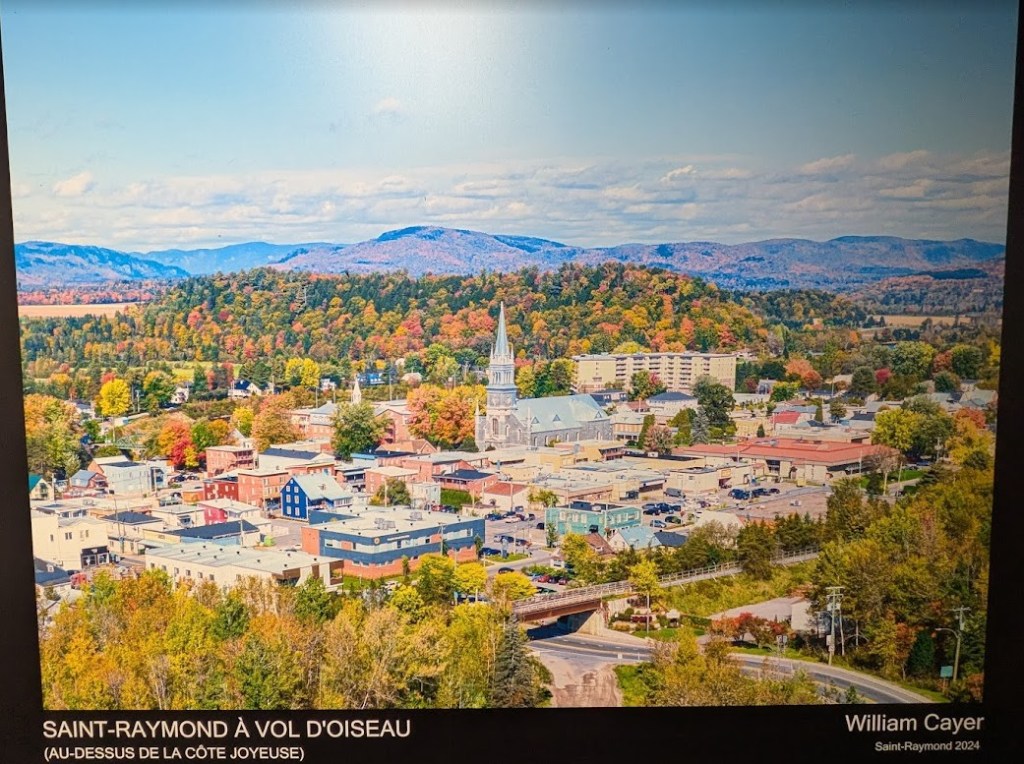
I had heard that Montreal is the international city where nobody looks down on you for not speaking French. As we got closer to our trip and I learned more about Quebec history, I wanted to get deeper into the province. We had to see Quebec City, and I wanted to see a small town too. We stayed in Saint Raymond, an hour outside Quebec City.
The stats from the 1995 referendum show that Saint Raymond was nearly split on Quebec independence, but you wouldn’t know by driving around. There were 10 flags of Quebec for every Canadian maple leaf. And it was the only place where I saw a separatist bumper sticker: LIBRES CHEZ NOUS.
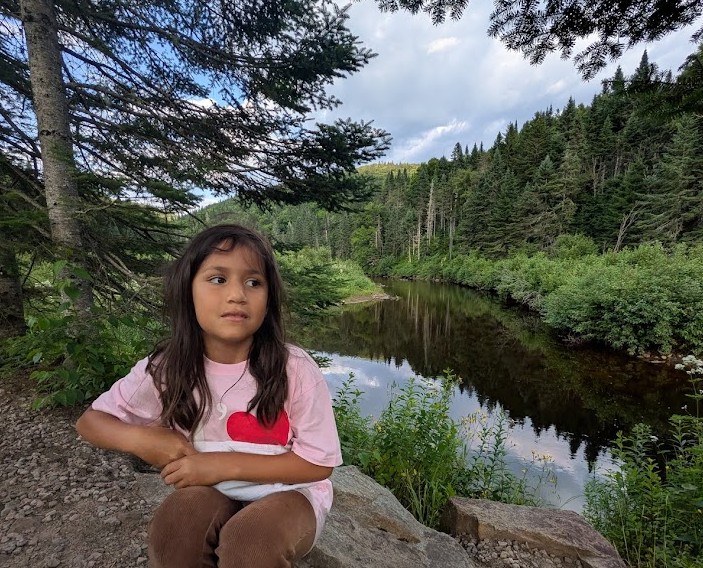
We hiked a mountain in the Jacques Cartier National Park, where the north country was stunning.
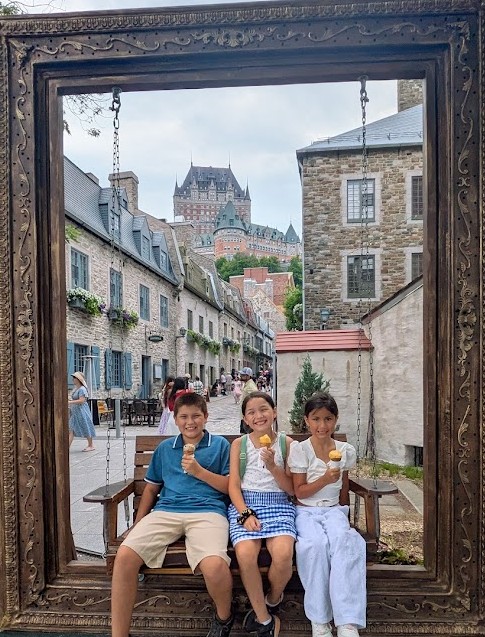
We did a day in Quebec City, which is said to be the most European city in North America. It reminded me of what a French friend in college told me 20 years ago: “Quebec is more French than Paris.”
My wife has been bothering me for years to take her to Europe, yet she didn’t like the crowded streets and street performers of Quebec. I told her if you don’t like this, you can forget about Europe. This is what it’s like. Of course the architecture is stunning.
I saw the European flavor in the immigrant scene as well. Especially in Quebec City, Arabs outnumbered Latinos. I had never seen that in North America. In Montreal, metro population over 4 million, there was no Spanish radio station. Unimaginable in the States. There was an Indian station, however.
I understand there is a robust community of Latinos in Montreal, even if there is no radio station. A Venezuelan at the street calisthenics station (again, great public spaces) told me about the Latin Quarter of South Americans. In America, the Central Americans and Caribbeans are concentrated, but the South Americans are usually dispersed throughout the cities and suburbs. Paterson, New Jersey is the only concentration of Peruvians I’m aware of.
As an American, you don’t think much of Canada, unless it’s hockey. I used to see Canada as just a smaller, less interesting version of America. Like an inferior and insignificant coworker that nobody would realize is gone if he were fired. Once I moved to South America and befriended a dozen or so of them, I learned many of them have a real hard-on for disparaging America and Americans.
I’ve come away with a completely different attitude about Canada. Coming from St. Louis, then South America and now Philly, I was obviously never in search of safety, cleanliness or civilization. But now that I’ve tasted it, I want more. I’m 46 years old. I’m at a different stage of life. I may not need drama or chaos. I’ll take peace and sophistication. There is a unique character to Canada to dig into. Especially Montreal and greater Quebec.
Whenever the wife and I are dreaming of Montreal or greater Quebec, however, I end the dream by insisting that we need to experience a winter first. The Cameroonian said his small SUV was buried to the roof in snow one day.
But I was never in South America for the weather. Mild climate is great but it didn’t play any part in why I was there. In fact, over the last six years in the States I have re-accustomed to winters, something I wondered whether it was possible in my first harsh winter.
A friendly Quebecker in Saint Raymond told me it snows so much that they lose electricity a few times each winter. I couldn’t believe it. How do you stay warm? You throw a log on the fire, he told me. Every house has a fireplace and everybody is stocked with firewood. That’s not the life in Montreal, he clarified, but the provinces.
I can say I don’t mind snow from Philadelphia, but it may be a different story up there. But you know what you see around Saint Raymond in the winter? MOOSE!
Downtown Montreal features the world’s largest underground city, a network of tunnels connects the main sites for easily getting around in the winter. And it has beautiful public spaces like this, where I took this video of my youngest daughter, the diva.
When we got back to Philly I rolled the windows down to a sunny, humid, 90-degree day. And the children all screamed in protest, “We want to go back to Canada!”
 Expat Chronicles
Colin
Canada appears on a lot of “Best Countries To Retire To” lists. It sounds nice, but I would never want to live there because of the winters. I spent a couple of winters in an RV in far south Texas. It was common to see Canadian flags in the park there. You know why. The weather is only a little better than Siberia in Canada in the winter. I’m going the other direction. We visited Panama and Costa Rica in August. Not bad, but I’m still planning to go expat in Pereira with its year round nice weather. Probably very soon. I’ll let you know how it goes. I spent 6 months there 6 years ago and I liked it.
Regards, Steve
LikeLike
I haven’t seen the winters in Canada, but if it’s not unbearable then I’d be more inclined to suffer Montreal snow that than something like Rio de Janeiro summers. Obviously there are cities with year-round comfort, but I think I’m just bored with Latin America. It’s not that fun anymore.
If Quebec winters do prove too harsh, we’re thinking FRANCE.
LikeLike
When you announced your departure from Peru several years ago, I was incredulous, and I thought you’d surely be back in a few years. Well, I was wrong. You’ve repatriated with astounding success, and now I wouldn’t be surprised if, once the kids are are grown and launched, to see you moving yet again to a place like Canada. Or even a greater stretch.
LikeLike
As one among the men (and women) who don’t fit in, I would be shocked if we stay put here in the States. If the Quebec winters are too much, or maybe if Montreal isn’t different enough, I’m also thinking about FRANCE. Francophilia is the next move, the “strange and new.”
LikeLike
Per Wikipedia: Je me souviens — the full significance of which cannot perhaps be readily expressed in English words but which may be paraphrased as conveying the meaning ‘We do not forget, and will never forget, our ancient lineage, traditions and memories of all the past.
I remember (Je Me Souviens) is the title of your story. Je Me Souviens it is on all the license plates of the province of Quebec which is where your American readers may have noticed it. I did not catch that the first time reading this post.
LikeLike