
Nine months ago I wrote Smart Money’s on Biden in 2024, a prediction that President Joe Biden would win reelection in 2024, no matter who his opponent was.
That prediction is based on Allan Lichtman’s Keys to the White House. Lichtman’s formula caught my attention in 2016 when he did not change his prediction that Trump would defeat Hillary Clinton even after the infamous “Grab ‘em by the pussy” tape.
I like the premise of his formula, that a large, mature democracy like the United States will elect leaders pragmatically based on a few metrics. Maybe I like it because it simplifies something too complex to understand. But the premise that parties win or lose based on economics, foreign relations, incumbency and scandal makes sense, and Lichtman’s track record is real. I’m with it until it fails on both the popular vote and electoral college (to date it only failed electoral college in history’s closest election).
Biden is out, as of today. It looks like Kamala is in. This would change at least one key (no incumbent) and possibly two if the Democrats have a contentious succession. If they do have a messy primary, that would change two keys. Three means Trump wins. The economic keys don’t have time to fall. The most likely would be the third-party key if RFK Jr. has real support.
For now I’ll keep my money on the incumbent Democrats retaining the White House given the keys outlined in the original article. The formula is a little weaker without the incumbent, but in current conditions it doesn’t matter who the nominee is.
I have changed my mind in one regard. I wouldn’t say “smart money.” Not long after writing that article, I began saying that I have no idea what will happen. Nobody could have predicted the details of this or any race. Someday the 13 keys will fail. Maybe this year.
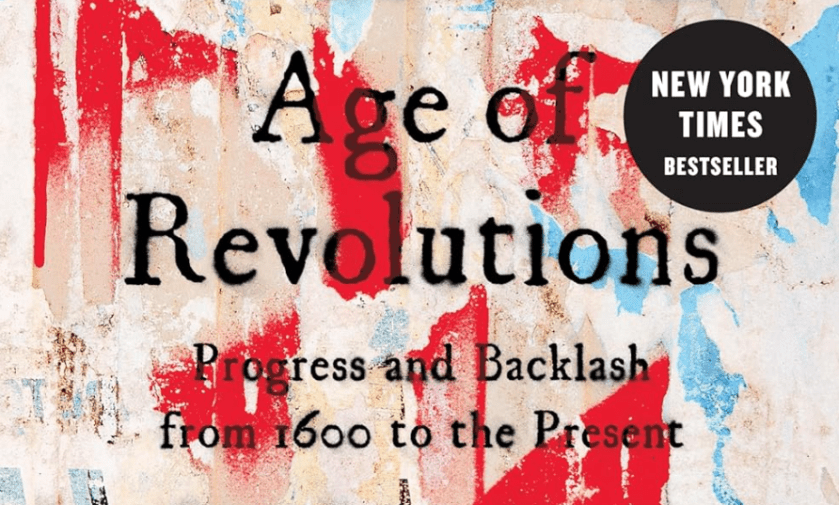
I fancy myself a student of history, and I’m newly committed to the long view after reading Fareed Zakaria’s latest book, The Age of Revolutions. I’ve already recommended it to friends as going deeper after Why Nations Fail, which is on this blog’s Required Reading list.
“Why Nations Fail” explains why the countries settled by the Spanish, who had first pick of lands in the Americas, are poorer than the United States and Canada (in short, pluralism). I zeroed in on England’s Glorious Revolution as a future rabbit hole to go down someday. Zakaria’s book delivers a good primer on the Anglo-Dutch rise of political and economic pluralism.
The book also outlines all the political realignments from parliamentary England to contemporary America. I grew up thinking of conservatism and Republicans as the party of market capitalism and economic prudence. When it stopped being that, my sense of reality was offended. I was sure it would revert to the mean.
But politics have always changed in unexpected ways. In 19th century England, the right was comprised of landed gentry who wanted to prioritize agriculture. Their opponents on the left were merchants and manufacturers in industrializing cities. The right supported welfare benefits for the peasants to preserve a traditional way of life, while liberals preferred they work up from their bootstraps in a dynamic economy. The two would later join forces against labor unions.
These changes have always happened. I hadn’t internalized that the current change was permanent, that the party of Reagan is dead. But that’s okay. From the book:
[Technology, economics, identity} together almost always generate backlash that produces a new politics. Human beings can absorb only so much change so fast. The old politics, inherited from a prior era, often cannot keep pace. Politicians scramble to adjust, modifying their views and finding new coalitions. The result is reform and modernization or crackdown and revolt, and often some combustible combination of both.
Trump is a known quantity. If enough people want to give him another term, I can disagree. But why get worked up about it?
Trump is still viable because he surrounded himself with establishment figures who served as guardrails for his kookier ideas. He didn’t effect much change. Now he knows the system, and to surround himself with sycophants, so a second term could be off the rails. Or maybe the transactional businessman in him would retreat from anything too drastic.
But I don’t know … nobody does!
Worst case, it goes off the rails and the GOP find themselves where Britain’s Conservatives are today, on the opposite side of a supermajority. If it doesn’t go off the rails, it’s much ado about nothing.
History moves in decades and generations, not months and years. I’m along for the ride, trying not to allow it to affect my mental health. It will if you let it. I’ll close with this, a good creed for centrism, again from Zakaria’s book.
Extremism may feel satisfying, but gradual reform more often produces enduring change. If liberals can understand that time is on their side, and that their opponents are not always evil or stupid, they might find that they are able to gain broader acceptance and that progress will be made—steadily, albeit slowly. [Conservatives], for their part, should recall how resisting any change at all can simply bottle up frustration until it erupts in revolution. Rather than preserve every aspect of the status quo, better to follow the lead of the British conservatives who, after 1832, made their peace with the Great Reform Act’s gradual democratization, according to the credo, “Reform, that you may preserve.”
Does the book sound interesting? Here’s a PDF of all my highlights.
 Expat Chronicles
Reading your comments on the Spanish and English colonizers I remembered when I was in Argentina 20 years ago on vacation. I had dinner with friends of my wife (at the time). I don’t know the history of Argentina but the other man said that back in the colonizing days the English tried to take over Argentina but were fought off and left. His comment was they should have welcomed the English with open arms and their country probably wouldn’t be the economic shithole it is in the 21st century,
There is a great video on YouTube about why Colombia is poor, but it is all in Spanish. Rapid Spanish. You can find it if you search for its title “Porque Colombia es pobre? y otros paises ricos”. It is a fascinating 30 minute program, but if you just want the answer (and I believe they are correct), Colombia is poor because the people lack discipline. I’ve seen that in my experience.
LikeLike
I highly recommend “reading “Why Nations Fail.” One of the authors married a Colombian woman and teaches a course at Uni Andes. References CO a lot.
They use examples where there is no cultural or ethnic difference between people on either side of a legal border, but the outcomes align with their thesis of political and economic pluralism. Spain was a century behind the Anglo-Dutch reforms.
LikeLike
Yeah, they could have been rich like India or Jamaica!
I honestly don’t know how people can make these claims with a straight face. The majority of former British colonies are extremely poor.
LikeLike
I just looked at GDP per capita of former colonies of England, Spain and France. Former English colonies were the poorest (Zimbabwe) but also the richest. In fact the upper income countries it produced are far and away above the countries France and Spain left behind. That would be one reason.
I’d also compare former English colonies not to the world, but to their neighbors. Jamaica isn’t too bad when compared to Haiti and Cuba, for example. And India is thriving compared to Bangladesh, Nepal or Myanmar.
LikeLike
If I had to guess, I think Trump wins this election.
It could go either way and Im not saying Trump wins because of political bias.
But the way I see it is this:
Yeah, you got the key model. It has been right many times and rarely wrong. Hard to argue with that. And that I suppose is the best way to predict who wins.
But as you pointed out in the previous article to this one, sometimes bigger factors like inflation can be a big unknown.
I would argue the attempt on killing Trump is another big detail. Especially as it relates to voter turnout. Even on CNN, you had one of those talking heads literally compare the atmosphere of the RNC convention to that of what Obama had in 2008.
Granted, I would disagree with that a little bit. I wasnt at the RNC convention but nothing right now feels as strong as the ¨Obama mania¨ as I remember it. Maybe for Republicans passionate for Trump but not for the country as a whole.
Still, it is partly true. I do think the attempt on Trump will boost greatly Republican turnout.
You hear people try to compare the attempt on Trump to the attempt on Reagen to understand how it will impact the election. Reagen won by a fuck ton in the election after someone tried to kill him.
But it´s a different country and we both know Trump wont get anywhere near the landside as Reagen did in 1984.
In the current political age, it´s really about voter turnout in my opinion. Way more than some election cycles back then. At least within my short life time, it has always felt like whoever gets the nomination for either D or R has a 50 50 shot.
You dont see Ds or Rs winning the Presidency with 60% or more of the voter turnout. Not within my life time so far and probably not what we will see in 2024.
So the question for me is: who gets the turnout?
And thats why I see Trump maybe winning
If we are being honest, I dont know a single person who is excited about Harris and didnt know a single person excited about Biden. And I got more democrats than republicans on my Facebook timeline. None of them are excited
When Harris ran for the DNC nomination in 2020, pretty much nobody wanted her to be president. She had terrible polling for most of it. And nothing to do with her career as VP has helped her image or boost excitement for her.
Granted, I dont think most people were excited for Biden either in 2020 and he will won.
Though I think thats also because so many people felt compelled to go vote for Biden to kick Trump out. From my perspective, thats really the main thing that got people voting for Biden in 2020. Kick Trump out. I hate Trump and I want him gone.
Do people who dont like Trump feel as strongly for their dislike of the man today in 2024 than in 2020 or even 2016? I think not.
Plenty of people still hate him but I think the passion behiind the hate is less strong these days. In part because he has been out of office for 4 years, because we are so used to all his BS and drama that its not as surprising anymore and because as a candidate he isnt saying or doing as many crazy things as when he started in 2016.
Even his debate with Biden was pretty tame. In 2016, he´s telling Clinton he´s throwing her in jail on the debate stage. In 2024, he was pretty tame with Biden relatively speaking.
And again just how passionate people continue to feel for their hate against Trump matters a lot in getting voter turnout for a man (or now a woman) that they otherwise dont care about or feel passionate about.
Now you might argue that Harris will get some voter turnout because of her gender or race. Perhaps. Though as of now it doesnt feel like people are making as big of a deal about her maybe being the first female president as they did with Clinton. Im going to guess that factor wont be as favorable to her based on the vibe Im getting now.
The good thing for Harris is at least she has 100% backing it seems. Joe, Obama and others have endorsed her. She seems to be guaranteed to have enough delegates for the convention. Lots of money has already been poured into her campaign. She´s good to start running. And no bloody contest. Not even a Bernie Sanders candidate to spoil her nomination a little like we saw with Clinton 2016 and the Bernie bros who were mad they didnt get him in office.
Though the decision I think to have her replace Joe only some few months before the election is a risky one. Personally, I think it makes them seem not decisive. Joe had already gone to the first debate. We all assumed he would be the man and now replace him after a bad debate performance? Im not saying he should be president in 2024. Im saying it´s bad optics to replace your candidate like that only some months prior.
But I guess it helps calm concerns about the democrat candidate being too old and or not all there cognitively.
Either way, who knows what will happen
My thought process is that it really comes down to voter turnout and I 100% believe that Trump has the advantage there (especially with the attempt on his life) over someone like Harris
LikeLike
The other 2 things to mention too is the topic of abortion and project 2025
I do remember people getting very passionate and angry when roe vs wade was overturned
You even saw abortion brought up during the main debate
It doesnt feel as if people are as angry about it then vs now.
On that note, I have heard people suggest that maybe the killing attempt on Trump will be less motivating to voters to go out and vote some months after the fact before the election
Who knows. People do have short attention spans. Though Trump did get a good photo out of it that will help his campaign. Even with Mark Zuckenberg going on TV and admitting Trump looked badass.
So we will see how much either factor still motivates people to vote
The Project 2025 thing is important too because, regardless of what people think about it, it´s very clearly the Democrat attempt to motivate people to go out and vote out of fear for their democracy. Which has been the main argument by Democrats this election cycle it seems. Though Trump has tried to distance himself from it on social media.
Anyway, who knows what will happen. That´s all that comes to mind
LikeLike
I would zoom out a little. In 2016 Trump won a statistical fluke, almost a miracle, with 46% of the vote against a historically weak candidate leading an overconfident campaign amid the public assumption that he didn’t have a chance. His victory prompted a swift backlash as Republicans underperformed in every election since. He actually grew his share in 2020 to 47%, but he boosted Democrat turnout even more to lose the popular vote by over twice as many total votes. That election marked the first time since 1932 that a party lost the White House and both chambers in Congress in just four years. Then January 6 happened. Then an unpopular Supreme Court overturned Roe vs. Wade. Then he was convicted of felonies. Now he’s facing a candidate who would be the first woman president. And all this time, Boomers are dying and Zoomers are turning 18 every day.
Again, zooming out, I just don’t see this tide turning. After all that, does he get more than 47%? I would imagine it goes down, at least a little.
Re: inflation – there is an uncanny precedent in the 1948 election (gift link). I think the assassination attempt would be a factor in changing votes if it were part of a trend of rising left-wing violence, as opposed to an incel with an AR (for example, I believe George Floyd protests help get Trump to 47%). The only people who care about Project 2025 are already voting the Dem ticket.
On the other hand, my analysis would suggest it’s not that close. But I also believe that the polls aren’t as bad as critics allege, and polls have it close.
LikeLike
Thinking about this some more, wondering if the assassination attempt was big enough of an event to be included in my first paragraph of big events. Am I biased? Maybe. But looking at 1984, Reagan had only two keys against him. That has only happened a handful of times in history. Conditions were ripe for a landslide. Not to take anything away from the notable keys of a charismatic incumbent (Reagan) against an uncharismatic challenger (Mondale) and GOP party mandate.
One of the keys against Reagan was long-term economy. GDP growth during Carter’s govt was higher than during Reagan’s first term. I didn’t think it would be a stark difference, but I never would have guessed late 70s > early 80s.
So I’d keep my first paragraph of broad contours intact. If anything, I might remove the overturning of Roe v. Wade. But I wouldn’t add anything.
LikeLike